
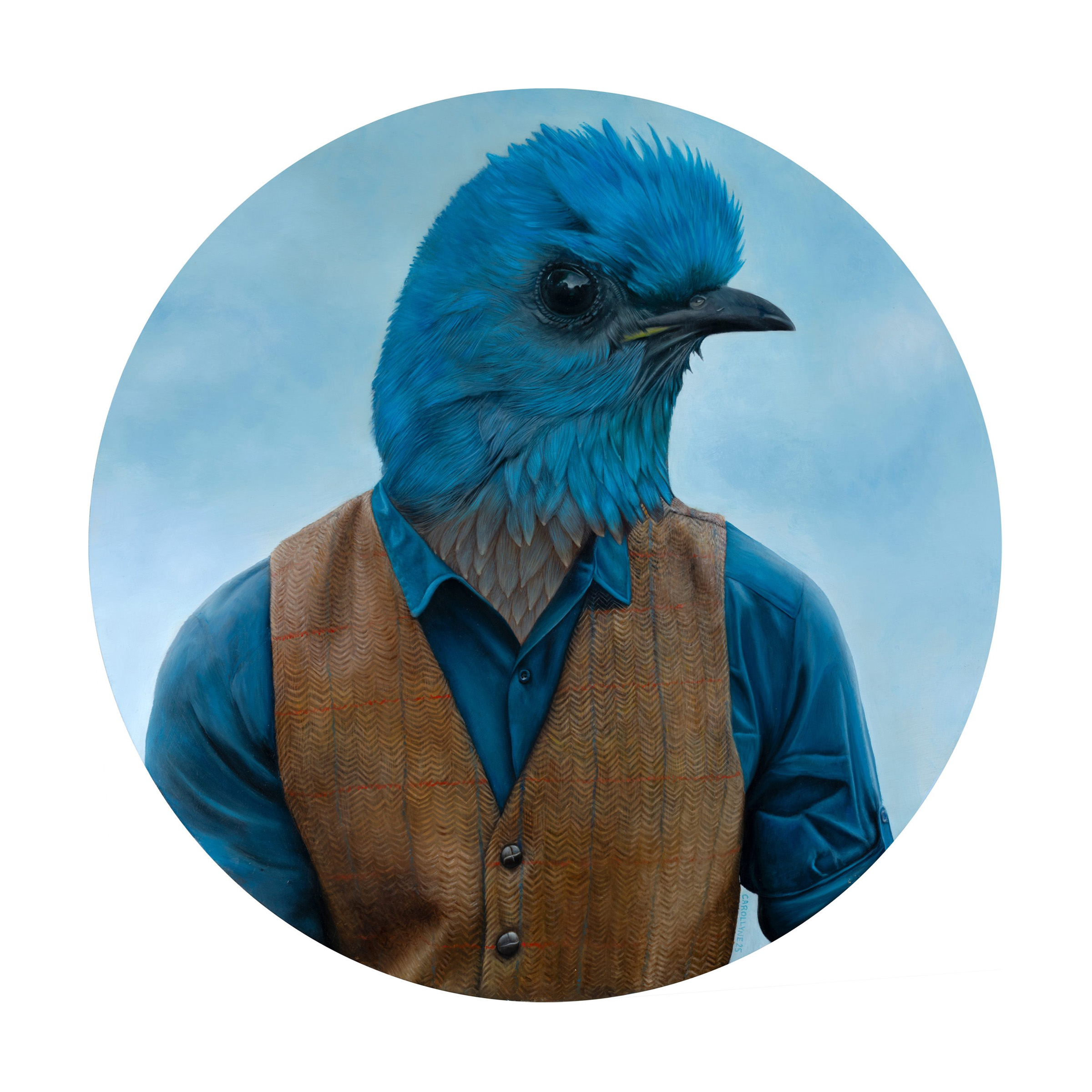
Project Description
NIMBY (Nature in My Backyard) is an ongoing series exploring the ecological relationships within the backyards, front yards and side yards of residential neighbourhoods on southern Vancouver Island. These spaces appear not simply as private property, but as habitats within a connected living landscape. Attending to both the species that remain and those that have disappeared, the work examines how familiar places hold traces of ecological loss, cultural memory and the possibilities of coexistence.
The title reclaims the acronym NIMBY—commonly understood as “Not In My Backyard”—to ask what it means to care for nature close to home. Drawing on David Suzuki’s articulation of “Nature in My Backyard,” the series questions the dismissal of local ecological concerns as resistance to change. The backyard becomes a contested space in which private ownership intersects with shared ecological responsibilities, and where land-use decisions affect lives and relationships extending far beyond property boundaries.
Central to the series is an understanding of Victoria’s urban forest as a Garry oak ecosystem transformed by urbanization. Roads, buildings and property lines have been imposed upon an existing ecological and cultural landscape; they do not define the limits of its relationships. Shaped through millennia of Indigenous stewardship, Garry oak ecosystems are not remnants of an untouched wilderness. The continuing work of Songhees knowledge holder Cheryl Bryce foregrounds the lək̓ʷəŋən Kwetlal food system, in which camas meadows and oak landscapes sustain relationships among food, medicine, community and intergenerational knowledge. The series considers ecological decline alongside the colonial disruption of these relationships and the division of living landscapes into parcels of property.
Birds associated with Garry oak habitats bring these questions into focus. The western bluebird’s disappearance as a breeding bird from Vancouver Island, followed by efforts to reintroduce it, reveals the fragility of relationships among nesting cavities, mature trees, open meadows and insect life. An old tree is more than an individual organism: its hollows, branches and eventual decay provide food and shelter for others. Its removal therefore represents not only a reduction in canopy, but the loss of dwelling places and ecological relationships that cannot be immediately replaced by planting another tree.
Rather than treating nature as separate from the city, NIMBY attends to the city as an inhabited ecosystem. The series asks whose presence is recognized in discussions of neighbourhood change, whose losses remain uncounted, and what forms of belonging extend beyond human ownership. Through attention to local species and their absences, the work reframes the backyard as a place of ecological connection and responsibility—proposing that care for what lives nearby is inseparable from imagining a shared urban future.
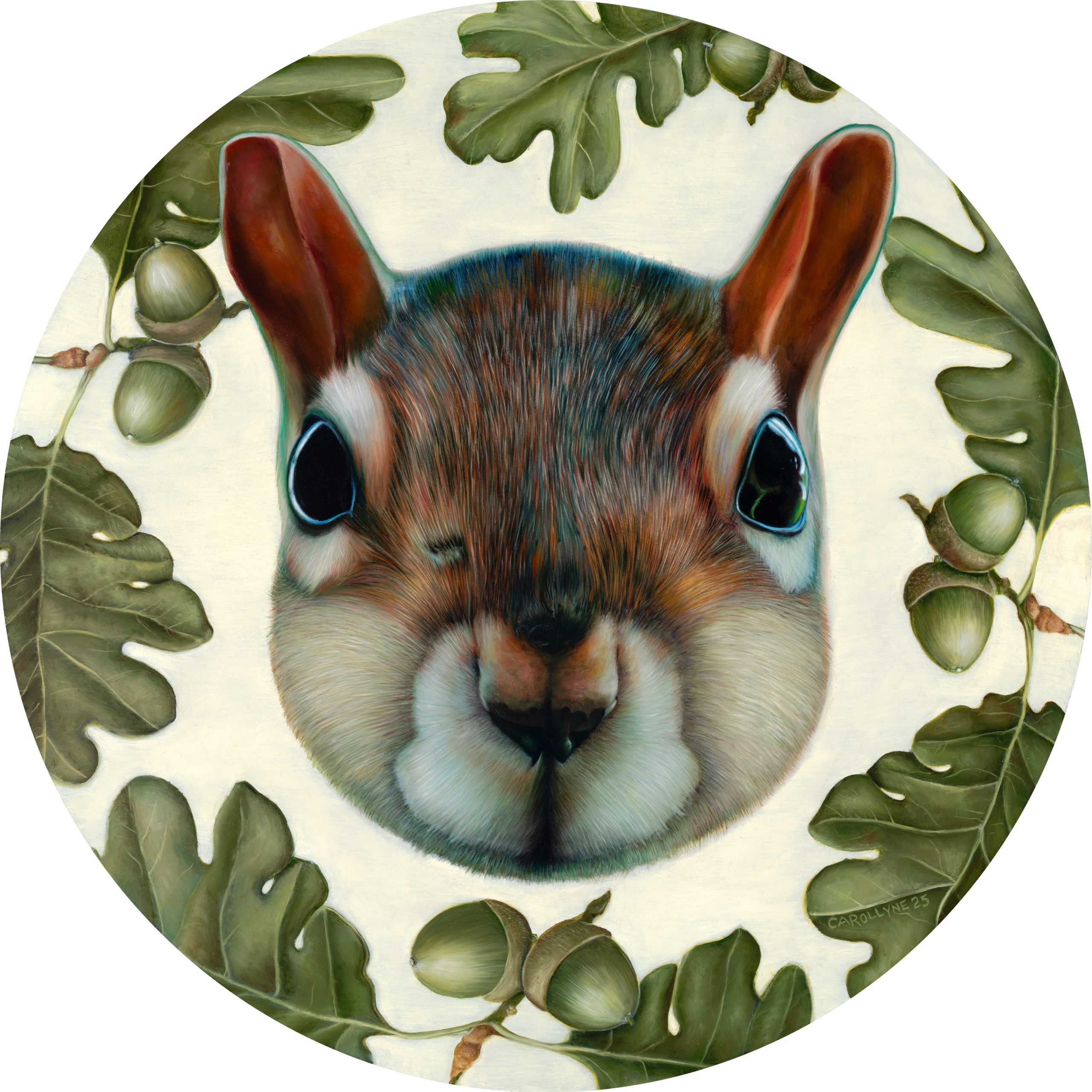
Carollyne Yardley. Garry Oak Squirrel, 2025. 30” diameter Oil on Panel.
Archival research
The archival materials below trace early uses of “Not In My Backyard” in debates about radioactive and hazardous waste disposal. A 1979 newspaper clipping, a 1980 environmental publication and a chart of the term’s usage provide context for examining how NIMBY became a label applied to community opposition, including contemporary disputes over residential development.
These records inform the series’ interest in how language shapes the perceived legitimacy of ecological concerns. Drawing on David Suzuki’s reframing of NIMBY as “Nature in My Backyard,” the work asks how care for nearby habitats might be understood as a shared responsibility.
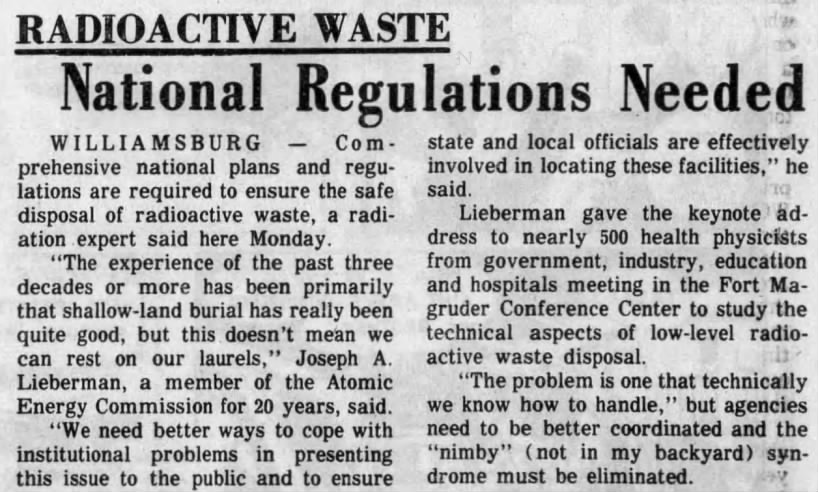
Daily Press, Newport News, Virginia · Tuesday, February 13, 1979. Earliest use of acronym NIMBY.
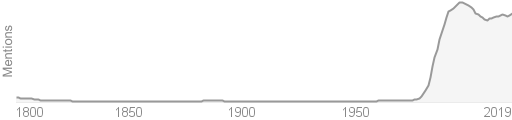
Use over time for: nimby. Oxford Dictionary. Accessed May 28, 2025
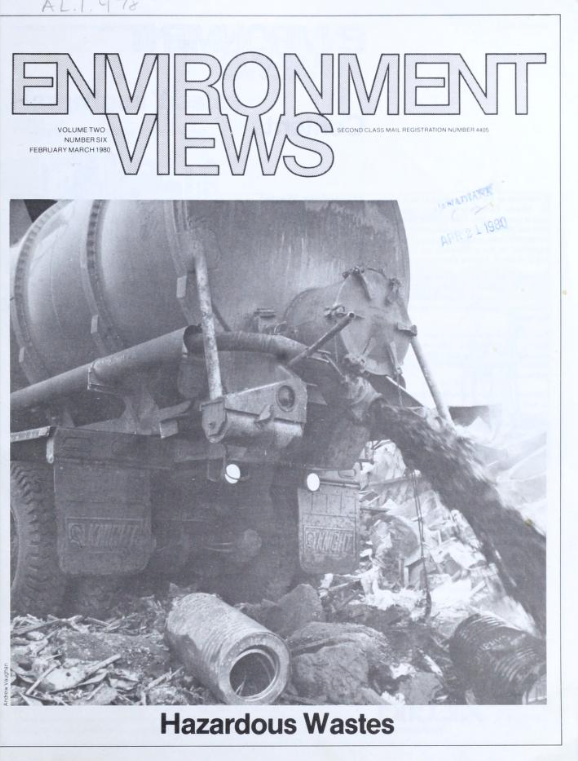
Unchanged: Sniatynski, Gillian (February–March 1980). “Hazardous Wastes”. Environment Views. 2 (6): 5. Cover
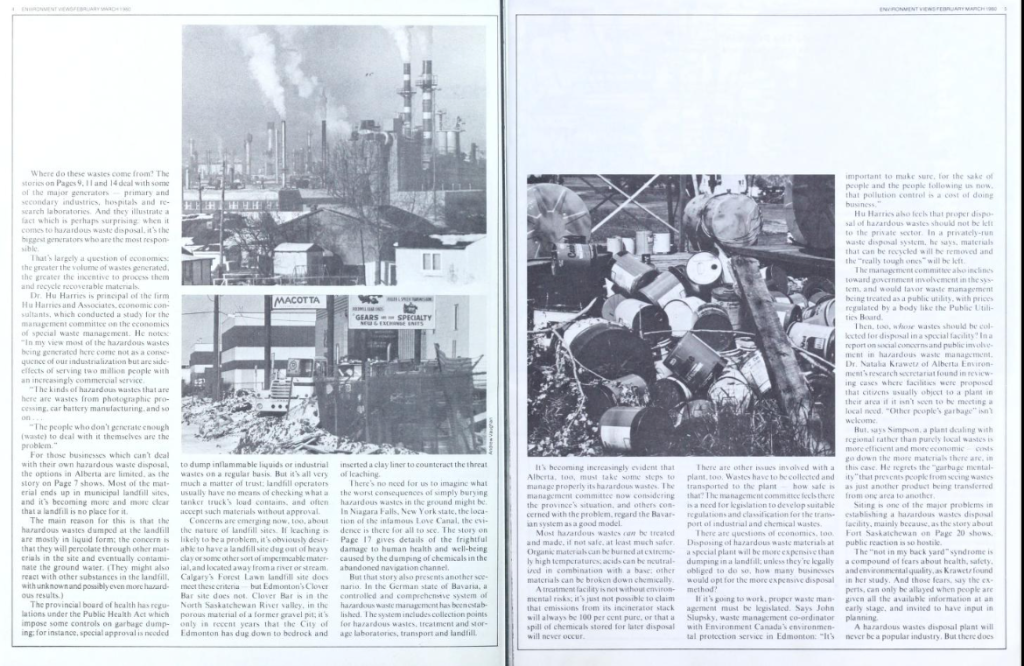
Unchanged: Sniatynski, Gillian (February–March 1980). “Hazardous Wastes”. Environment Views. 2 (6): 5.
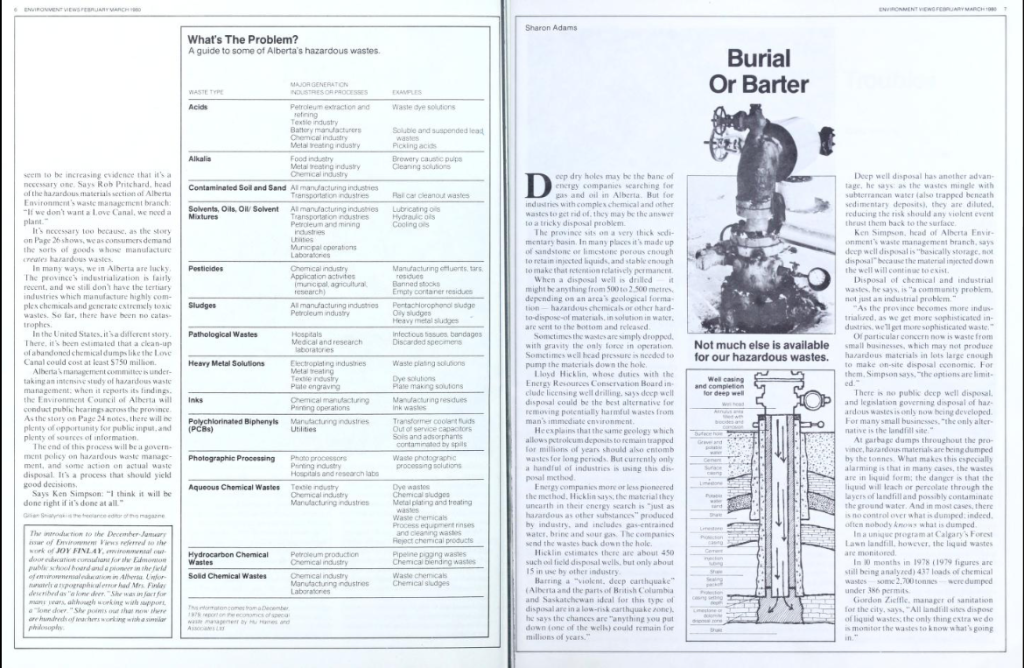
Unchanged: Sniatynski, Gillian (February–March 1980). “Hazardous Wastes”. Environment Views. 2 (6): 5.