
Project Description
Urban Foraging
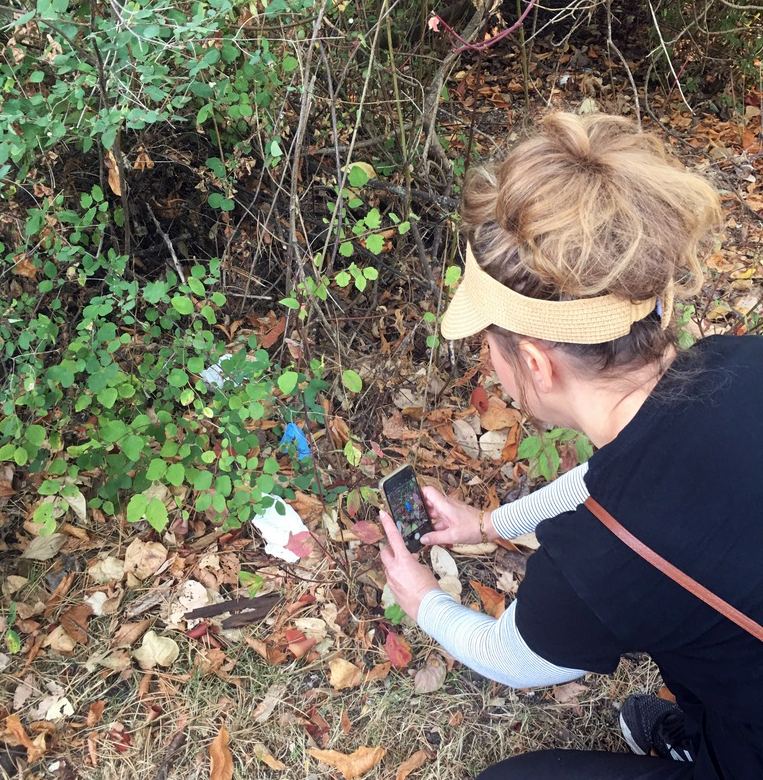
Image above: Carollyne Yardley, Foraging in an urban forest, 2022.
Urban Foraging explores walking, gathering, and assemblage as ways of thinking and making within a shared squirrel–human environment. Informed by squirrel behaviour and drey-making—the construction of nests—the process begins around trees inhabited by grey squirrels, where organic remnants and discarded human materials compost together in the soil. These encounters guide the gathering of materials and open possibilities for new bodily forms.
Intuition, touch, and chance carry the process from the urban forest into the studio. Through psychometry—the practice of seeking intuitive impressions through contact with objects—I approach the gathered materials as collaborators, attending to the thoughts and sensations that arise while handling, weaving, and interlocking them. The resulting assemblages bring the material relationships of a shared habitat into sculptural form, exploring connections between species through the substances they encounter and leave behind.
Walking allows thought to move and remain subject to revision. It brings attention to what Francesco Careri describes as “the unconscious zones of the city, those parts that elude planned control” (81). Materials encountered by chance interrupt predetermined aesthetic choices, allowing the work to develop through what is found. Urban Foraging asks what these acts of gathering and joining can reveal about the supposed boundaries between species and the environments they inhabit.
Reference
Careri, Francesco. Walkscapes: Walking as an Aesthetic Practice. Culicidae Architectural Press, 2017.