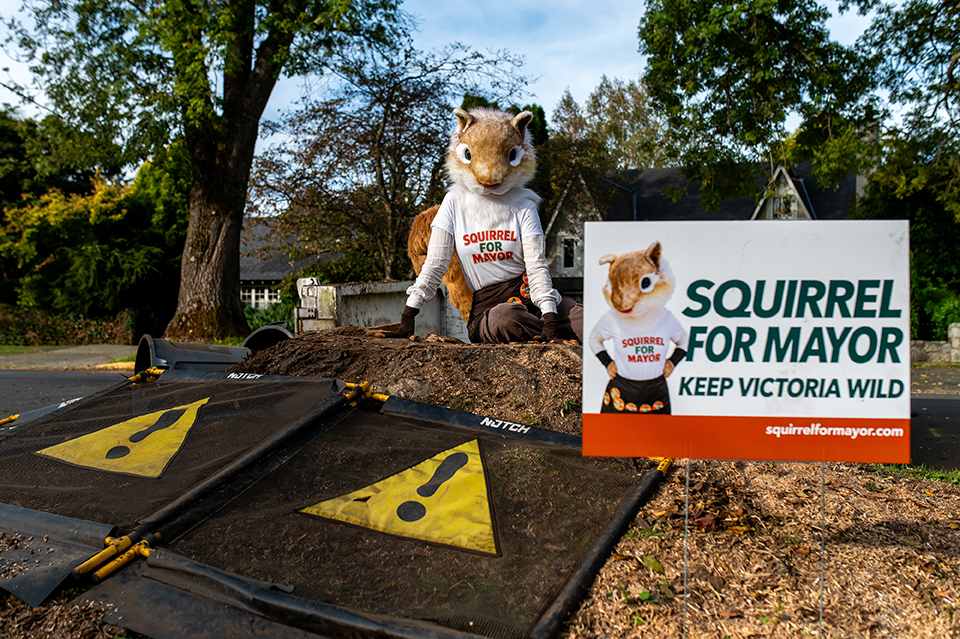
Photo by James MacDonald. Squirrel for Mayor in costume beside a campaign sign during the BC municipal elections in the City of Victoria. October 2026
An ongoing art project exploring urban forest health and public participation in local decision-making.
Squirrel for Mayor began as a blog in 2024 and combines arts-based methods, policy research, and community engagement to explore urban forest health and public participation in local decision-making.
In 2025, the Squirrel for Mayor character appeared at an event at City Hall to listen as a large group of advocates and politicians discussed the fate of the large sequoia tree at Centennial Square. This appearance became an opportunity to document how urban forest policy enters public conversation.
During Victoria’s 2026 municipal election, the project moved into the streets through hand-assembled signs, character appearances, photography, and exchanges with people encountering an unexpected candidate.
Squirrel was never on the ballot. This independent, non-partisan art project invited people to participate in the election while considering how urban decisions affect the many species that share the city.
The message: Keep Victoria Wild.
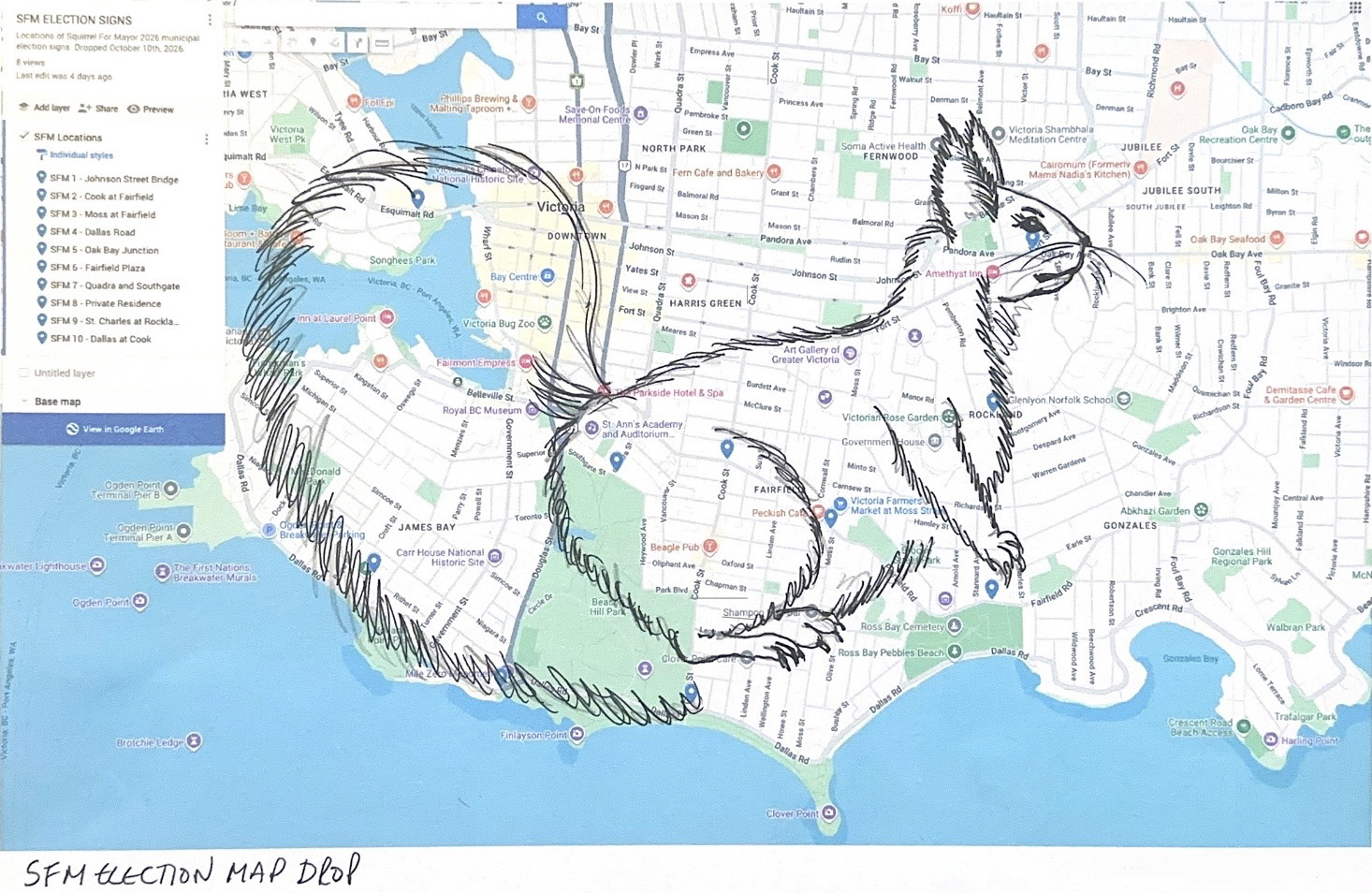
Squirrel for Mayor’s 2026 sign locations, mapped in Google Maps and printed, with a squirrel drawn in pen by Squirrel for Mayor.
Twenty signs, many encounters
For the 2026 campaign, 20 weatherproof signs were made, 13 of which were installed around Victoria. This small, reusable edition brought the project into everyday neighbourhood routes.
The sign installations also revealed a practical constraint: each sign needed plantable ground on public land to support its stakes. Where concrete extended to the edge of private property and there was no grass boulevard, some intended locations couldn’t be used. The search for places to install signs became another way of noticing how space is allocated within the city.
The signs became conversation starters. People photographed them, shared sightings, asked for signs, and sent messages. Requests came from a resident who wanted to display one on their lawn, an election candidate, and a professor of culture and media studies.
The project borrowed the familiar visual language of an election campaign and introduced an unexpected candidate: a squirrel. That small disruption opened a question about representation. Who gets to speak for a city, and how might the needs of its other inhabitants enter public discussion?
The signs’ meaning developed through their circulation. A sign encountered on a street, shared as a photograph, or requested for someone’s home takes on different relationships and audiences. These exchanges became part of the artwork, extending it beyond the original design and the artist’s original intentions.
As signs disappeared from their locations and requests arrived, the campaign also became a limited-edition art drop. Their changing status—from campaign material to sought-after art objects—raised another question: what makes something worth noticing, keeping, or caring for?
After the election, anyone who had acquired a sign was invited to enjoy it for years to come—or return it someday for reuse.
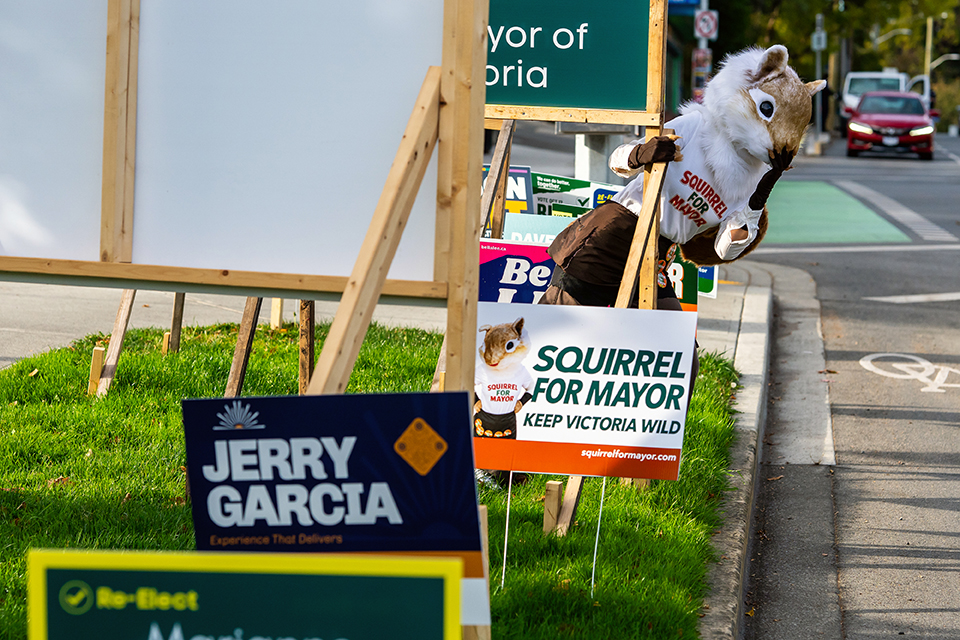
Photo by James MacDonald. Squirrel for Mayor in costume beside a campaign sign during the BC municipal elections in the City of Victoria. October 2026.
Making room for a tree’s future
The campaign drew attention to the space trees need to grow, particularly large-at-maturity species such as Garry oak. Setbacks, sunlight, soil, and plantable space can sound like technical planning details, but they shape the future forest.
A tree-protection bylaw can require planting a replacement tree, but zoning must allow room for its future growth.
Squirrel offered a playful way into these questions, inviting people to imagine homes for humans alongside habitat and room for tall trees. The project encouraged voters to read candidate responses through Vote4Tomorrow and consider environmental commitments without endorsing a candidate.
Separate from the art project, the artist was selected as one of two Vote4Tomorrow moderators for the Victoria questionnaire. Vote4Tomorrow is a non-partisan initiative that published candidates’ responses to environmental questions without commentary or a scorecard. This civic role provided a real-life connection to the electoral process, supporting voters in exploring candidates’ positions and forming their own assessments.
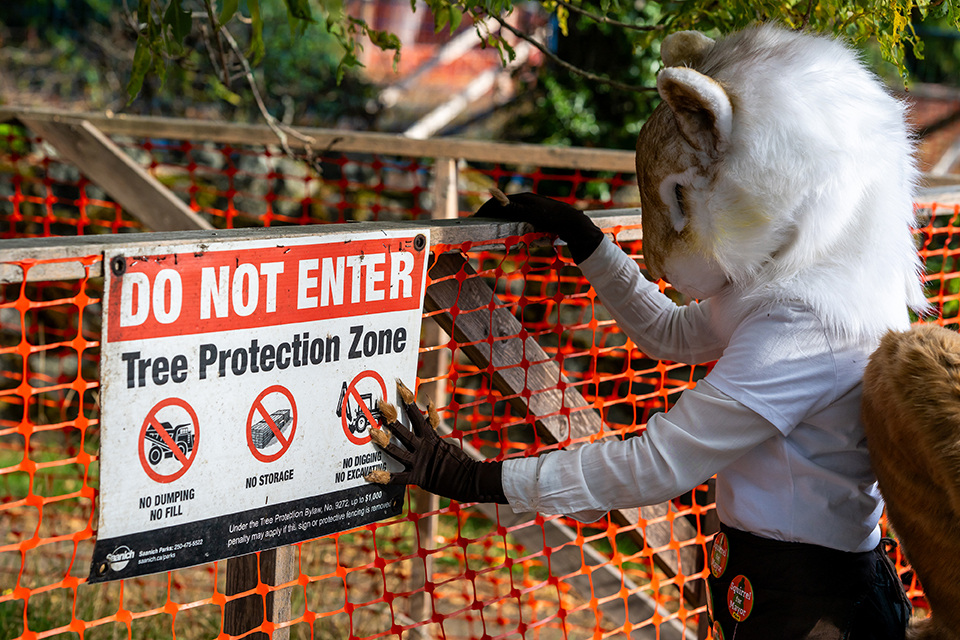
Photo by James MacDonald. Squirrel for Mayor considers the boundaries of a tree protection zone during the 2026 campaign.
Public response and unexpected invitations
The campaign attracted media and political interest, including a mention in Capital Daily and a documentary interview request exploring why nature matters in urban environments.
CHEK News contacted Squirrel for Mayor about appearing on camera, although the invitation went unseen in Instagram’s hidden message requests until it was too late to participate. Three candidates from two different municipalities reached out, and one councillor candidate was gifted a sign.
Public responses ranged from expressions of delight to questions about whether Squirrel was an actual candidate. These exchanges became opportunities to explain the project and its invitation to think about urban habitat through art and humour.
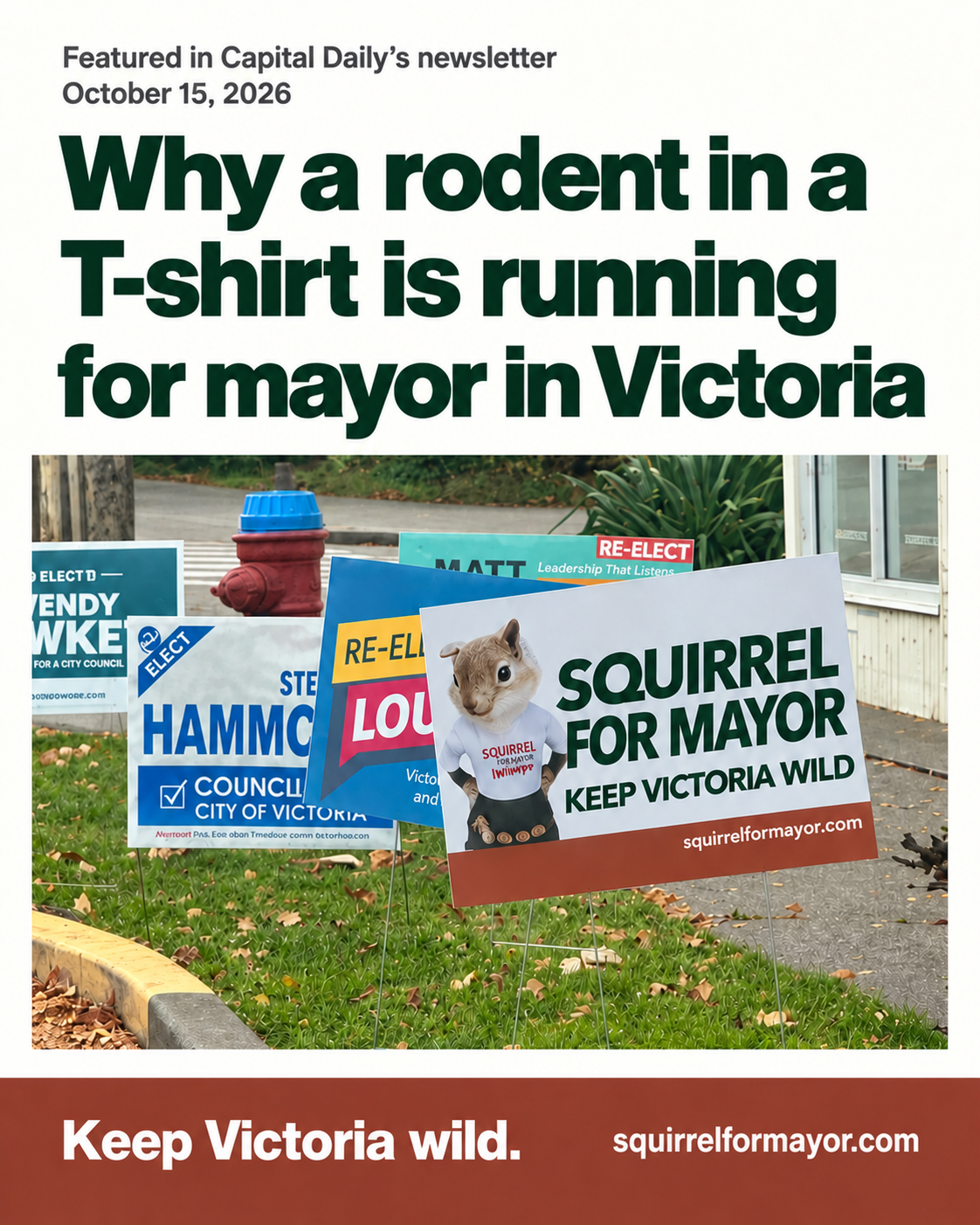
Squirrel for Mayor featured in Capital Daily’s October 15, 2026 newsletter, bringing the art project and its urban forest message to a wider audience.
A growing public record
The project now spans a furry squirrel mask and tail, a T-shirt, buttons, gloves with furry claws, and twenty election signs: thirteen in the limited-edition art drop, five requested, and two in the artist’s collection. It also includes a blog, Instagram, a newly launched Facebook page, and an e-newsletter signup. Together, these physical and digital elements extend the character’s presence across street encounters and online conversations. The newsletter will bring together campaign observations, photographs, links to new articles, and available statistics.
Campaign material has also been entered into the Squirrel Database, prompting further contributions of squirrel-related items. These contributions extend the project through other people’s encounters, collections, and associations.
Together, the signs, photographs, correspondence, maps, and public responses form a growing archive of the campaign and material for a future exhibition.
The listening campaign continues
Work is continuing on Squirrel’s performance, including mask articulation and a portable voice system. These experiments will support future conversations and events.
The next stage is a listening campaign: attending to birdsong, tree talk, human conversations, and the relationships that make a city a shared habitat.
Squirrel for Mayor continues to explore how a squirrel can invite curiosity, encourage participation, and bring urban forest questions into everyday conversation.
The question remains: how can public decision-making become more attentive to the lives, habitats, and relationships that sustain a city?
The best cities think in acorns, not election cycles.